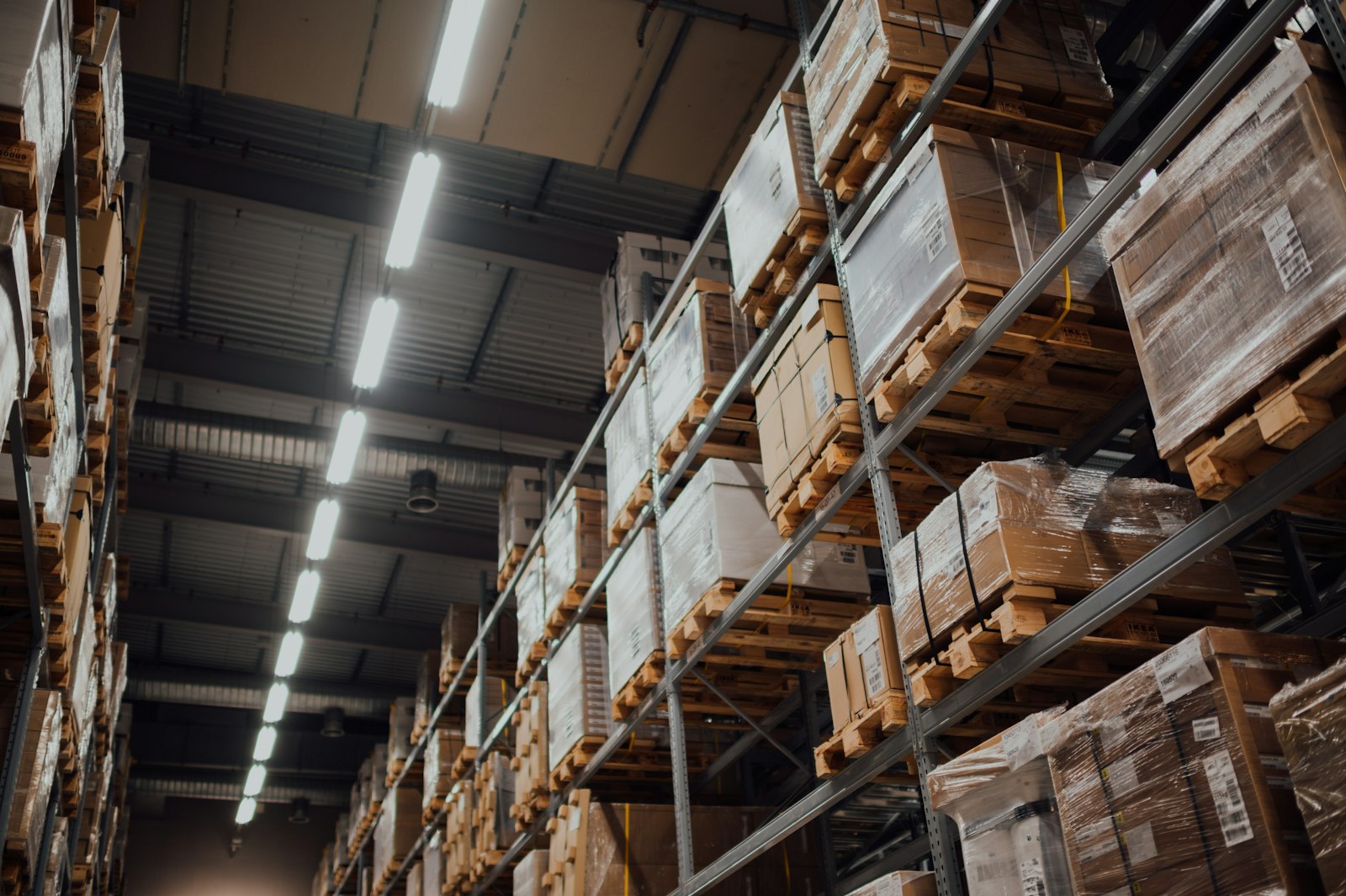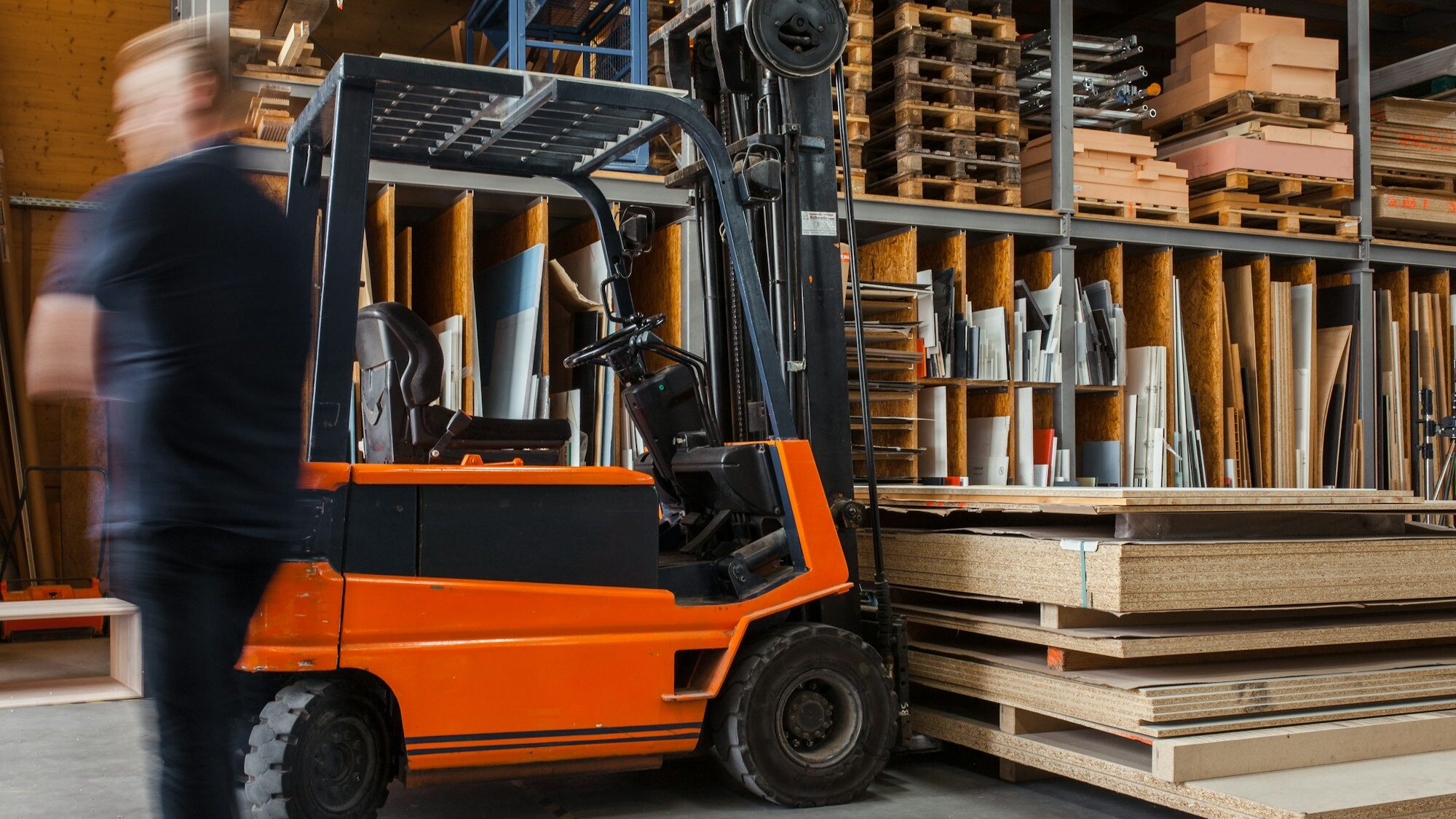
China builds a large share of the world's electric forklifts, and the factory price is genuinely attractive. That is also the trap: a forklift is not bought, it is operated — for a decade, by people whose safety depends on it, needing parts that have to come from somewhere.
Almost every regret we hear about importing industrial trucks traces back to the same thing. The purchase was evaluated as a product decision when it was an operating decision.
What we do, and what we do not
We will find and verify manufacturers, audit them on site, check that the compliance documentation for your market actually exists and covers the configuration you are buying, sort out the battery transport paperwork, and inspect before shipment.
We do not provide a local service network, we do not hold spare parts, and we are not a warranty counterparty. Those have to be solved before you order, not after the truck arrives. If nobody in your country can service it and no one stocks the parts, a cheap forklift becomes an expensive paperweight the first time a controller fails. We would rather say this on a public page than discover it with you in month four.
Lead-acid or lithium
This is the first real decision, and it changes the machine, the building and the arithmetic.
Lead-acid is cheaper to buy, needs a ventilated charging area, needs battery swaps for multi-shift operation, and needs watering and maintenance. Lithium costs more up front, charges opportunistically during breaks, needs no swap infrastructure, and carries a different failure and transport profile. Over a multi-shift operation the lithium total usually wins; over single-shift light duty it often does not.
Decide this before you shortlist suppliers, because it determines which factories are even relevant and what your site has to be able to do.
Lithium makes the shipment dangerous goods
A lithium battery cannot legally move by sea or air until it has been tested to the UN Manual of Tests and Criteria, Part III, subsection 38.3. The shipment is then declared and packed as dangerous goods, with restrictions that include limits on state of charge for air cargo.
The practical consequences are real and routinely discovered late: the freight quote is not a normal freight quote, not every forwarder handles it, the documentation has to exist before booking, and the testing cannot be applied retrospectively to a battery already built. Establish it at specification stage.
Whose name goes on the machine
This decision has more legal weight in industrial equipment than in anything else on this site.
Importing a machine that carries the manufacturer's own brand makes you an importer, with importer obligations — verifying the conformity documentation exists, keeping records, and being contactable. Placing that same machine on the market under your brand generally makes you the manufacturer in the eyes of product legislation, with the full set of manufacturer obligations attached: the technical file, the declaration of conformity, and the liability that follows the name on the plate.
Plenty of buyers do exactly that, deliberately and successfully. The mistake is doing it by accident because a supplier offered to put your logo on the mast for free.
Compliance, by market
For the European Union, machinery is regulated under the EU machinery framework, requiring CE marking, a declaration of conformity and a technical file that must be available to authorities. Which law applies depends on when the machine is placed on the market: Directive 2006/42/EC governs up to 19 January 2027, and Regulation (EU) 2023/1230 applies from 20 January 2027, with no overlap between the two. Forklift lead times are measured in months, so if your order will be placed on the market after that date, specify the Regulation now — conformity work happens at the factory, not at the port.
For the United States there is no equivalent pre-market approval for industrial trucks. The design standard is ANSI/ITSDF B56.1, and the operational requirements — training, inspection, maintenance, modification approval — sit with the employer under the OSHA rules for powered industrial trucks. Note the direction of that obligation: your customer, the operator of the truck, is the regulated party. A truck that cannot meet those requirements is a truck they cannot lawfully use, which makes it your commercial problem even where it is not your legal one.
The specification that actually matters
Capacity at a stated load centre. A "2-tonne" truck is 2 tonnes at a specified load centre, usually 500 mm. Your load may not sit there. The derated figure is the real one.
Mast type and free lift. Determined by your door heights, container loading requirements and racking. Getting this wrong is not adjustable later.
Tyres. Cushion or pneumatic, and what surface the truck will actually run on.
Voltage and charger. The charger has to match your site's supply, including phase and frequency. This is a frequent and avoidable source of arrival-day disappointment.
Attachments. Side shift, fork positioners and clamps change the residual capacity. They are specified with the truck, not bolted on afterwards.
Parts commonality. Ask which controller, motor and hydraulic components are used, and whether they are proprietary or standard. This single question predicts your cost of ownership better than the price does.
How they ship
Forklifts are dense and heavy, so the freight is weight-driven rather than volume-driven — the opposite of most categories on this site. Depending on mast height they may ship in a container with the mast removed, or as breakbulk. Either way the handling at both ends is not a standard pallet operation, and the destination site needs to be able to receive it.
What we do on a forklift order
Establish battery chemistry and site constraints before any supplier contact, shortlist manufacturers rather than trading companies, audit on site because this is equipment that carries people's safety, confirm the conformity documentation covers your exact configuration, arrange battery transport testing and dangerous goods documentation, verify charger and voltage against your site, and inspect before shipment. Our fee is stated separately from the factory invoice, and tooling or certification costs are passed through at cost.